Listen Closer: The Vocal Tricks That Turn Rima Kapoor's Dialogue Into a Contact Sport
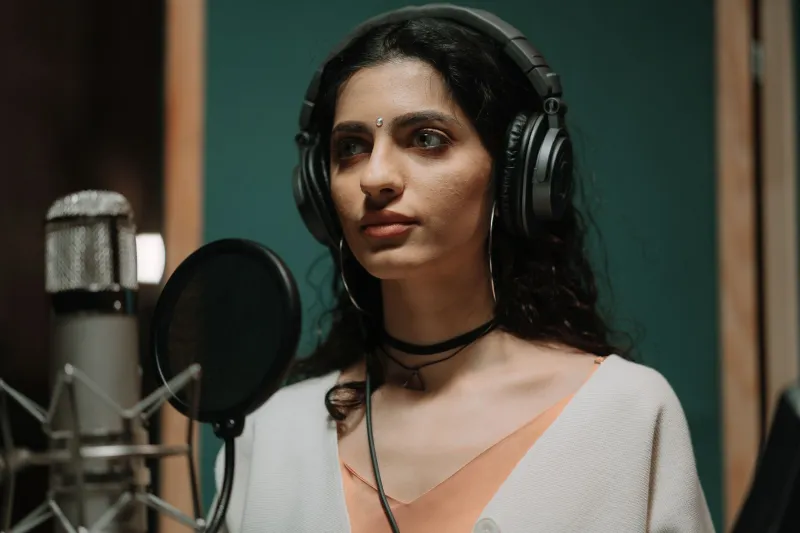
There’s a moment in every Rima Kapoor movie where the plot stops and your ears take over. Maybe it’s the way she clips the end of a word, or the half-second she lets a threat hang in the air. American audiences often meet her films through subtitles, which means we’re reading fast and missing half the performance. That’s a shame, because Kapoor’s voice is not a delivery system for dialogue. It’s the performance.
Why Her Voice Does Half the Work
Bollywood has always loved a big vocal gesture—the trembling monologue, the song that jumps an octave. Kapoor works in the opposite direction. She treats pitch, pace, and accent like costume pieces. A slight drop in register can make a corporate villain sound tired rather than evil. A sudden rush of words can turn a romantic confession into a panic attack. When you rewatch her scenes with your eyes closed, the character is still there.
That’s not an accident. Kapoor has talked in interviews about recording her own dialogue in pre-production, reading scenes at different speeds, and building private voice maps for each role. The result is a filmography where two characters can wear the same hairstyle and still feel like different species.
The Accent Isn’t the Point—It’s the Door
Kapoor’s accent work often gets reduced to ‘she can do regional voices,’ which misses the point. In Monsoon Ledger, her bank manager slips between crisp English for clients and a softer, Marathi-inflected Hindi for the security guard. The switch isn’t a party trick. It’s a status map. You learn who she trusts, who she fears, and who she’s performing for before the screenplay says a word.
That kind of code-switching is familiar to plenty of American viewers, even if the languages aren’t. Think about the voice you use on a work call versus the one you use with your family. Kapoor just makes the gap audible.
Pitch as a Costume
In The Salt Road, she plays a smuggler who speaks in a low, flat register for the first hour. It’s almost boring—on purpose. When she finally raises her voice, it’s not a shout. It’s a crack. That crack is the whole character: a person who has spent years keeping the lid on and just lost the fight.
Compare that to Chandni Chowk Blues, where she pitches her voice up and speeds through her lines like she’s trying to win an argument before the other person can start one. Same actress. Same year, roughly. Completely different instrument.
The Pause That Pays Off
Kapoor’s pauses are famous among editors because they’re never empty. She uses a beat to let a lie settle, or to give the other actor room to react. In Nine Lives of Naina, she waits three full seconds before saying ‘I know.’ The line lands like a door closing. Cut a second out of that pause and the scene still works, but it stops being scary.
American comedy writers talk about ‘the turn’—the moment a joke changes direction. Kapoor does the same thing with silence. She turns the air.
Five Scenes to Rewind and Listen Again
- Monsoon Ledger (2018)—the loan rejection scene. Listen to how she pronounces ‘collateral’ twice, differently each time. The first is for the client. The second is for herself.
- The Salt Road (2020)—the campfire negotiation. Her voice drops below the wind, and you have to lean in. That’s not a technical flaw. That’s a choice.
- Chandni Chowk Blues (2016)—the chai-stall argument. She speeds up until the words trip over each other, then stops cold. The silence is the punchline.
- Nine Lives of Naina (2022)—the hospital confession. The pause before ‘I’m not sorry’ does more than the line itself.
- Blue Hour Bombay (2024)—the final phone call. She whispers, and you lean in. That’s the trick. She makes you do the work.
How to Train Your Ear
Try this: watch a scene once with subtitles, once without, and once with headphones and your eyes closed. Note where she breathes. Note where she doesn’t. You’ll start hearing the architecture under the dialogue—the places where she’s holding back, the places where she’s letting go.
It also helps to listen to her interviews. Kapoor speaks in complete paragraphs, but she edits herself in real time. You can hear her trying a thought out loud, then revising it. That same instinct shows up in her performances. She’s not afraid to let a sentence sound unfinished.
The Takeaway
American fans love to quote Kapoor’s lines, but the real flex is quoting her silences. The voice is the performance. Turn it up, take the subtitles off for one scene, and let your ears do the watching.