The Rooms Tell the Story: Decoding the Production Design of Rima Kapoor's Most Iconic Films
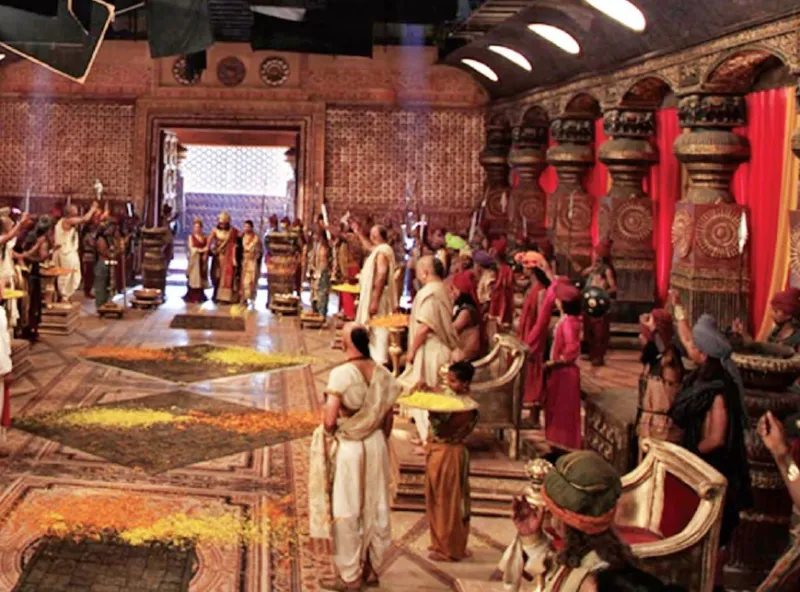
Photo: ornate Bollywood film set mansion interior production design, via mediaindia.eu
If you've spent any time bingeing Rima Kapoor's filmography — and let's be honest, if you're reading this site, you have — you've probably noticed something you can't quite put your finger on. Her movies feel different. Not just because of her performances, which we've covered extensively, but because the spaces her characters inhabit seem to have personalities of their own.
That's not an accident. It's production design, and in Bollywood, it's practically a character in every story.
Why the Sets in Rima's Films Do So Much Heavy Lifting
To understand what makes Rima's film worlds so distinctive, I spoke with Dr. Elaine Morrissey, a film studies professor who teaches a popular course on global cinema aesthetics at a large state university back east. Her take? American audiences are trained to read performance and dialogue, but Bollywood asks you to read space.
"In mainstream Hollywood, a living room is often just a living room," Morrissey told me over email. "In the kind of films Rima Kapoor gravitates toward, the living room is a thesis statement. Who sits where. What's on the walls. Whether the curtains are drawn. It's visual storytelling with the volume turned all the way up."
Think about it: when Rima plays the daughter of a wealthy family, the home isn't just lavish for the sake of eye candy. The scale of the rooms makes her character look small in them — literally boxed in by generational expectations. When she plays a young woman making it on her own in the city, her apartment is cramped, cluttered, and somehow still radiant. The space shrinks, but the character grows.
The Family Mansion: Beauty as a Cage
Let's start with the big one — the sprawling ancestral homes that show up again and again in Rima's family dramas. Marble floors, courtyards, those impossibly ornate wooden doors that groan open to reveal a hundred years of family history.
Morrissey points out that these sets borrow heavily from haveli architecture — traditional North Indian mansions built around interior courtyards. "The courtyard is the emotional center of the house," she explains. "It's where secrets get overheard, where confrontations happen in front of everyone. It's the opposite of the American privacy ideal. Everything is witnessed."
For Rima's characters, that architecture is destiny. When her rebellious daughters pace those colonnaded hallways, the design is making an argument: this world was built by and for someone else, and she's just living in it. Compare that to how American films stage teen rebellion — usually in cars, out on the highway. Rima's characters rebel in hallways and stairwells, in the heart of the house, because in these stories, there's nowhere the family doesn't reach.
The Cramped City Apartment: Small Space, Big Dreams
Then there's the other side of her filmography — the urban indies where Rima plays working women scraping by in Mumbai. These sets are masterclasses in controlled chaos. Clothes drying on a balcony railing. A single gas burner. A wall of family photos crammed next to a mirror doing double duty.
What's fascinating is how much warmth these sets radiate. Morrissey notes that Bollywood's visual language refuses to treat modest spaces as grim. "There's a color philosophy at work," she says. "Even the tiniest set is saturated — marigold yellows, deep teals, that famous Bollywood pink. Poverty in these films is never rendered in gray. It's rendered in color, because the point is resilience, not misery."
It's a genuinely different grammar than what US audiences see in, say, prestige TV, where struggle usually means desaturated palettes and fluorescent lighting. Rima's city films argue that a woman folding saris in a ten-by-ten room can still be the most vivid thing on screen. And honestly? She usually is.
The Detail Work: Velvet Chairs, Vanities, and Props With Backstory
Here's where the obsessives (us) come in. Start rewatching Rima's biggest films and pay attention to three recurring objects:
The vanity mirror. So many of Rima's pivotal scenes happen at a dressing table — applying kajal, deciding whether to cry or fix her eyeliner first. It's a stage where her characters perform for themselves before performing for the world.
The velvet chair. Notice how often the family patriarch or matriarch sits in an oversized, upholstered chair while everyone else stands? That's blocking and design working together to map power without a single line of dialogue.
The threshold scenes. Doorways, gates, train doors — Rima's characters are constantly framed mid-crossing. The sets are built to make leaving look epic.
What American Fans Should Watch For Next
Morrissey's advice for newcomers? Treat a Rima Kapoor movie like a museum you're allowed to walk through. Pause on the wide shots. Look at what's on the walls, what's on the table, who gets to sit down.
"Once you learn to read the rooms," she says, "you realize the sets have been telling you the story's ending from the very first frame."
So here's your homework: pick any film from Rima's middle period, watch it once for her performance, then watch it again just for the spaces. Trust us — you'll never see her movies the same way again. And when you catch that one detail everyone else missed, you know where to find us in the comments.

