How Rima Kapoor Actually Builds a Character From the Ground Up
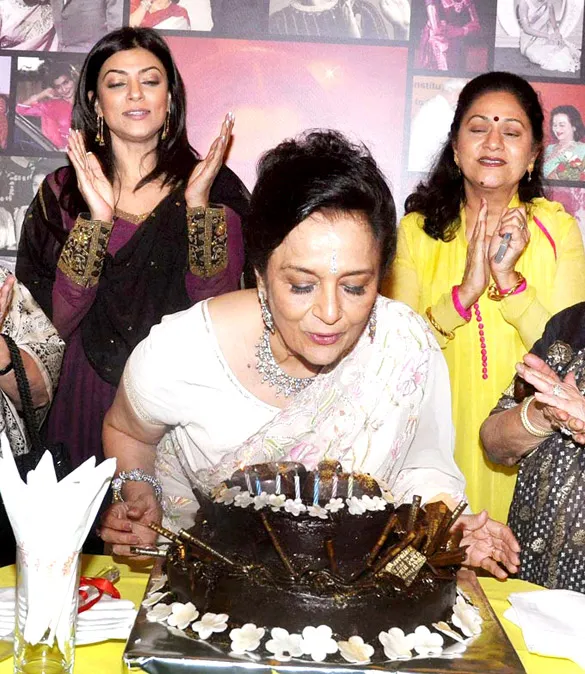
Photo: Bollywood Hungama, CC BY 3.0, via Wikimedia Commons
There's a moment in almost every Rima Kapoor performance where something clicks — where you stop watching an actress and start believing in a person. It's the kind of thing that's easy to take for granted when you're caught up in the story. But that seamlessness? It doesn't happen by accident. It's the product of a preparation process that's equal parts rigorous and deeply personal.
So what actually goes into it? We dug into interviews, behind-the-scenes accounts, and insights from people who've worked alongside her to piece together how Rima Kapoor approaches the work — and what it tells us about why her performances consistently land the way they do.
It Starts Way Before the Script Reading
For a lot of actors, the process begins when they get the script. For Rima, it tends to start even earlier. By multiple accounts, once she commits to a project, she immerses herself in the world of the character before she's even fully memorized her lines. That might mean reading books connected to the setting or time period, watching documentaries, or spending time with real people whose lives resemble the character she's about to portray.
When she was preparing for a role that required her to portray a woman navigating a high-pressure professional environment, she reportedly spent weeks shadowing people in that field — not to mimic them, but to understand the small, unconscious habits that come with living that kind of life. The way someone holds a pen. The particular exhaustion behind the eyes after a long meeting. Those details don't come from a script. They come from observation.
Acting coaches who've worked in the Bollywood space have pointed to this kind of research-first mentality as a marker of serious craft. It's the difference between playing a character and understanding one.
The Physical Side of the Process
Rima has been open about the fact that she doesn't separate the mental and physical dimensions of character work. For her, how a character moves is just as revealing as what they say. Before filming begins, she works closely with movement coaches and, in some cases, dialect trainers to build a physical vocabulary that's specific to each role.
Co-stars have noted that by the time she shows up on set, there's already something distinct about the way she carries herself — a shift in posture, a different rhythm to how she walks — that makes it easier to respond to her authentically. It's collaborative in that way. When one actor does the work, it pulls the performance out of everyone around them.
This attention to the body also extends to any physical demands the role requires. Whether that means months of dance training, learning a sport, or adjusting her diet to reflect a character's circumstances, Rima tends to treat the physical preparation as non-negotiable rather than optional.
Finding the Emotional Core
Technique can take you a long way, but at some point, every role requires an actor to find something true inside themselves to anchor the character. This is where Rima's process gets a little harder to pin down — and a little more interesting.
She's described, in various interviews, a practice of identifying what she calls the "emotional spine" of a character: the single driving need or fear that shapes every decision they make. Once she finds that thread, everything else — the dialogue, the blocking, the relationships — gets organized around it. It's a very specific kind of intentionality that keeps performances from feeling scattered or inconsistent across a long shoot.
People who've directed her have mentioned that she asks a lot of questions in early rehearsals, but they're rarely surface-level questions about motivation or blocking. They tend to go deeper — about backstory, about what happened just before the scene, about what the character is afraid of losing. That level of inquiry can be intense, but it's also what produces the kind of performances that hold up on a second or third watch.
How Her Approach Has Evolved
What's worth noting is that Rima's process hasn't stayed static. Early in her career, she leaned more heavily on instinct — a quality that served her well and made her performances feel spontaneous and alive. But over time, she's clearly layered a more structured methodology on top of that natural ability.
The result is something that feels both disciplined and free, which is genuinely difficult to pull off. You can see it in the contrast between her earlier work and her more recent projects — the instinct is still there, but it's now operating within a framework that gives it more precision and range.
Acting coaches who've trained performers across both Hollywood and Bollywood have noted that this kind of evolution — from instinct-driven to technique-supported — is the mark of an actor who's genuinely invested in longevity over flash. It's not the most glamorous story, but it's the one that tends to produce careers that actually last.
What This Means for Fans
For those of us who follow Rima's work closely, understanding her process adds a whole new layer to rewatching her films. Those moments that feel effortless? They're the result of weeks or months of deliberate preparation. The small choices — a glance held a beat too long, a line delivered just slightly under the expected emotional register — aren't accidents. They're decisions.
That's the thing about great craft: it hides itself. And Rima Kapoor is very, very good at hiding hers.